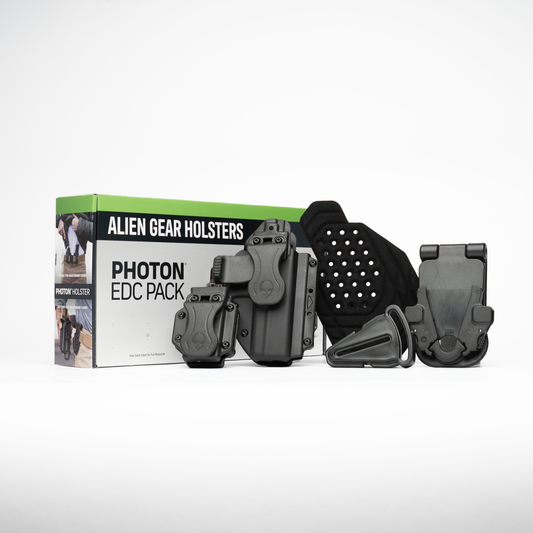
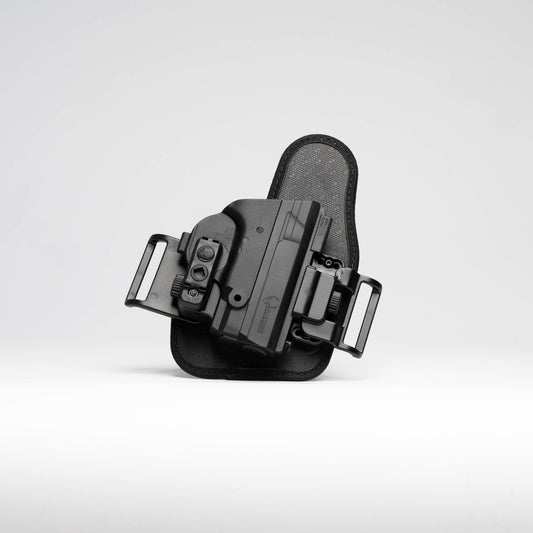
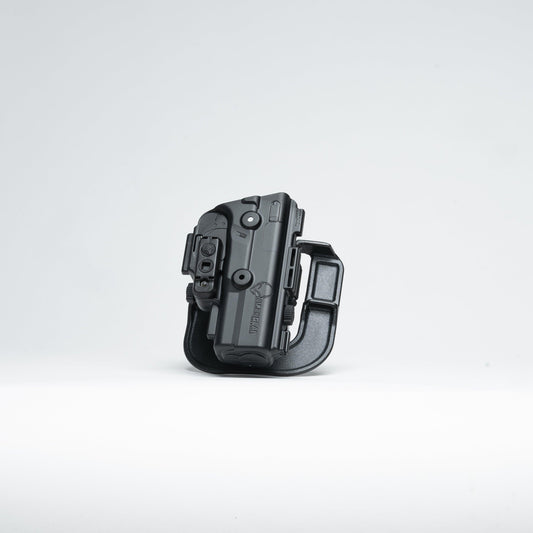
Holsters Built for the Slimline Glock 43X
The Glock 43X redefined slimline concealed carry by pairing the compact Glock 43 slide with the longer Glock 48 grip, giving you 10-plus-1 capacity in a frame just 1.10 inches wide.
That specific geometry, about 6.5 inches long and 18.7 ounces, is why a 43X needs a holster molded to its exact dimensions.
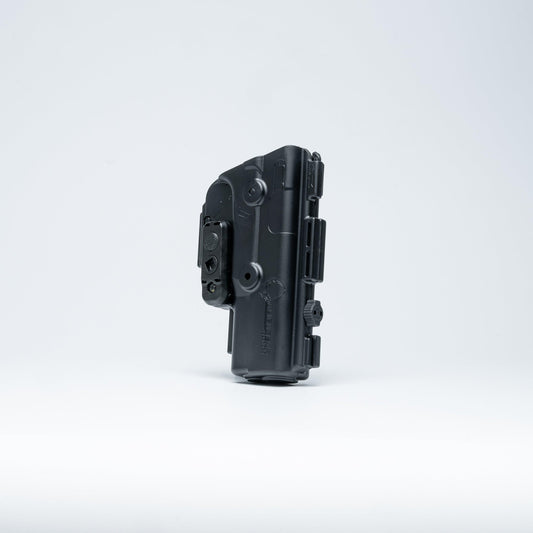
A holster cut for the shorter Glock 43 will leave the 43X slide partly exposed or create muzzle tension, hurting both retention and the draw. Every holster in this collection is laser-scanned to the 43X so it locks in correctly, covers the trigger guard fully, and draws clean.
Best Glock 43X IWB Holsters for Concealed Carry
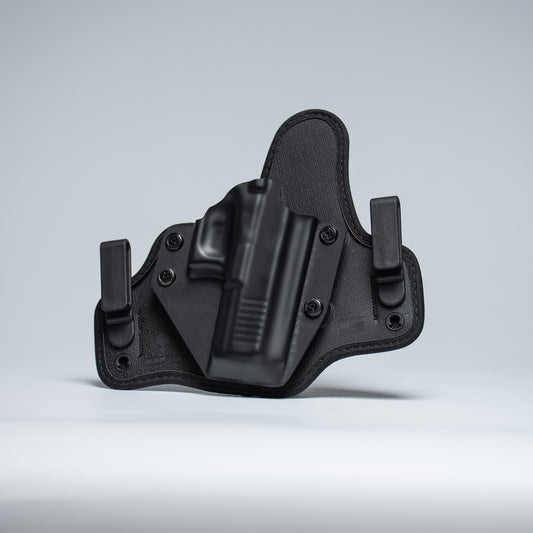
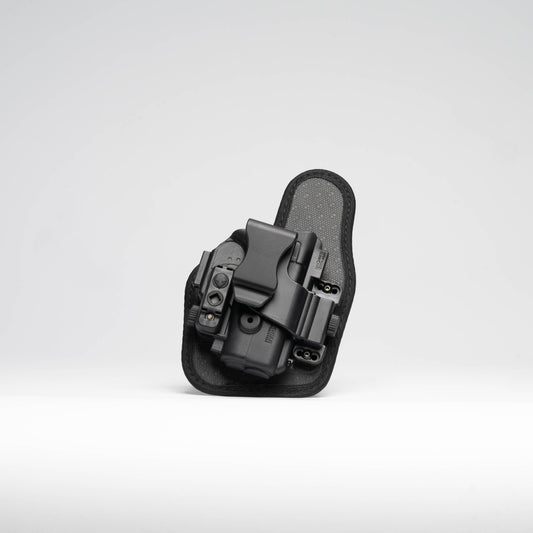
The 43X is built to disappear, so inside-the-waistband carry is where it shines and where most carriers start. A good 43X IWB holster balances deep concealment with a fast, repeatable draw.
Adjustable cant and ride height let you tune the angle and depth for appendix or strong-side carry and pull the grip in close to keep printing down under a t-shirt.
For all-day comfort, look for a slim shell, a full sweat guard to protect the slide, breathable backing, and adjustable retention so you set your own draw tension.
Carried at the 3:30 to 4:30 position, the 43X's light weight makes it easy to wear from morning to night, while appendix carry gives the fastest draw when the holster is tuned with the right ride height and a wedge.
Glock 43X MOS Holsters (Optic-Ready)
The Glock 43X MOS adds a direct-mount optic cut and an accessory rail to the slimline frame, and it is one of the most requested setups in this collection.
MOS holsters here include a raised, open sight channel that clears micro red dots and suppressor-height backup irons, so nothing contacts the optic during the draw or reholster.
The optic cut fits common slimline red dot footprints, including the Holosun 507K and EPS Carry, the Trijicon RMRcc, the Shield RMSc, and the SIG Romeo Zero.
If you carry a 43X MOS with a red dot, start here, and choose a light-bearing MOS fit if you also run a weapon light.
Glock 43X Holsters With a Light and Optic
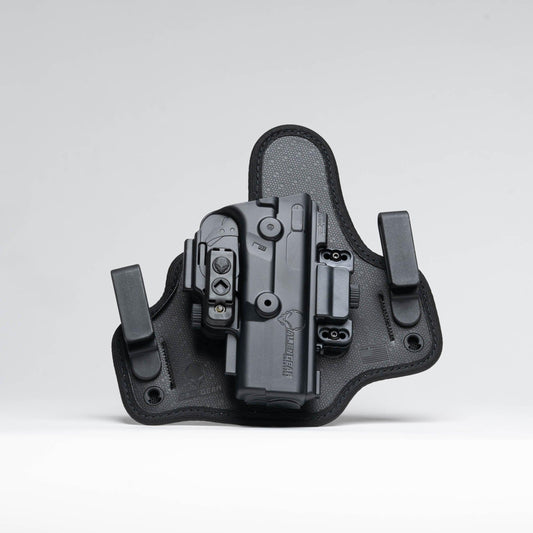
Many 43X carriers run a micro light, a red dot, or both, and these holsters are cut to clear the optic and molded around a specific light body so the pistol seats fully with both mounted.
Supported lights for the slimline frame include the Streamlight TLR-6, the Streamlight TLR-7 Sub, and the Nightstick TSM-11, TSM-14, and TSM-14G with green laser.
Light-bearing holsters retain off the light body, so use them with the listed light installed. You can run a light-and-optic setup in IWB for concealed carry or OWB for the range.
Glock 43X OWB Holsters
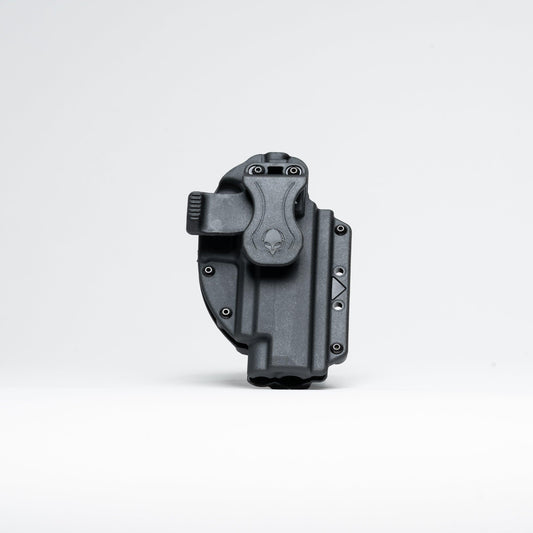
When concealment is not the priority, a 43X OWB holster gives a fast, stable draw for range and open carry. Belt-slide and paddle options ride higher on the belt, lock in with adjustable retention, and stay put through movement.
The 43X's light weight keeps the belt from sagging during all-day wear, and paddle versions add tool-free on and off.
Will It Fit My Glock 43X?
Match the holster to your exact 43X configuration:
- Glock 43 versus 43X: a Glock 43 holster will not properly fit the 43X. The 43X has the longer 48-style grip, so use a 43X-specific fit.
- Standard 43X versus 43X MOS: the MOS adds an optic cut and a rail, so use an MOS or optic-ready holster to clear the red dot, and a railed-and-light fit if you mount a light.
- Light-bearing models: match the exact light, since these holsters retain off the light body.
- Extended magazines: shells with a reinforced core hold their shape and concealment profile even with a Shield Arms S15 15-round magazine installed.
Specialty and Off-Body Carry
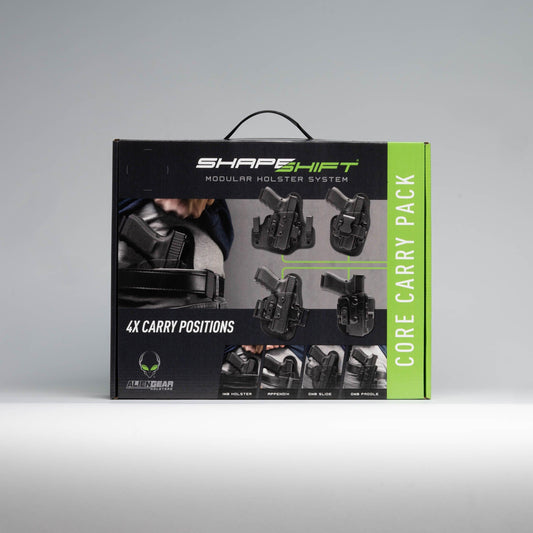
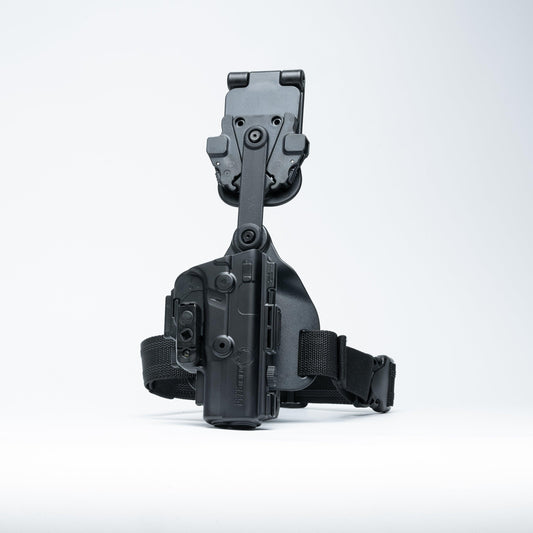
Beyond IWB and OWB, the collection also includes a swivel drop-leg rig for vehicle and tactical use, a chest holster for hiking and over-layer carry, and hook-and-loop mounting for packs, panels, and vehicle interiors, for the times standard waistband carry is not practical.
FAQ
What is the best holster for a Glock 43X?
For most carriers it is a slim IWB holster tuned for appendix or strong-side carry, since the 43X is built for concealment. If you run a red dot, choose a 43X MOS optic-ready fit, and add a light-bearing version if you carry a weapon light.
Will a Glock 43 holster fit a Glock 43X?
No. The 43X has a longer grip than the Glock 43, so a 43 holster will not support it correctly. Use a holster molded for the 43X.
Do you have a Glock 43X MOS holster for a red dot?
Yes. The MOS optic-ready holsters clear common slimline micro red dots like the Holosun 507K, Trijicon RMRcc, Shield RMSc, and SIG Romeo Zero, along with suppressor-height backup sights.
Can I get a 43X holster with a light and optic together?
Yes. Light-bearing MOS holsters clear the red dot and are molded for a specific light at the same time. Match the listing to your exact optic footprint and light, such as a Nightstick TSM-14G.
What is the most comfortable way to carry a Glock 43X?
Strong-side IWB at 3:30 to 4:30 is the most comfortable for many carriers during long wear, while appendix gives the fastest draw. Both improve with ride-height and cant adjustment, and a wedge helps stabilize appendix carry.
Does the 43X work with the Shield Arms S15 magazine?
Yes. The S15 boosts capacity to 15-plus-1, and holsters with a reinforced core keep the same concealment profile and clip footprint with it installed.
Is the Glock 43X good for appendix carry?
Yes. Its short slide and slim grip make it a popular appendix gun. Tune the ride height and cant, and add a wedge to reduce grip tipping and pressure when seated.