Which Glock 26 Do You Have, and Will It Fit?
You picked up a G26 Gen 5, went looking for a holster, and somewhere along the way got told the fit is different from a Gen 3 or Gen 4.
For a holster, it is not.
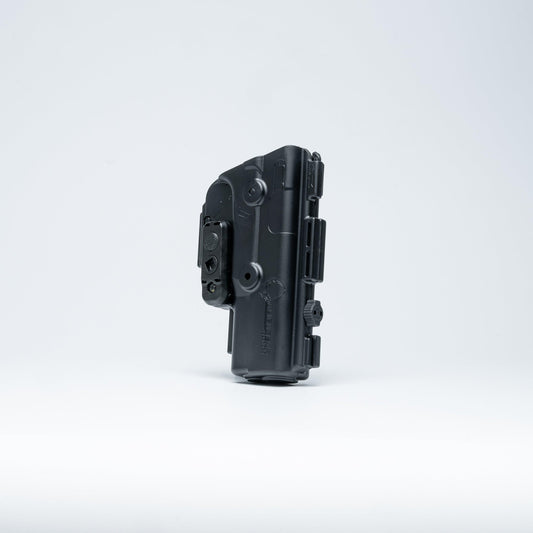
A holster grips the slide and trigger guard, and the G26 keeps that same external profile across Gen 3, Gen 4, and Gen 5, along with the newer V series that carries the Gen 5 design.
The Gen 5 changes you can feel, the ambidextrous slide stop, the deleted finger grooves, the grip texture, all live on the parts of the frame a holster never touches. That is why a holster molded to the Glock 26 fits your gun whichever generation you carry, selected by model at the product page. The one thing that actually changes the holster is a red dot.
The standard G26 has no factory optic cut, but the Gen 5 MOS does, and if you run a mounted optic you want a holster with optic clearance, which the Cloak Chest Holster provides on confirmed configurations.
Confirm your generation and any optic at the product page and the fit lines up.
G26 Holsters: IWB and Appendix Carry
Most people buy a G26 to finally carry every day, and the waistband is where that plan succeeds or quietly falls apart. The short grip is what makes the gun concealable, but it is also a short lever, so a holster sitting at the wrong height or cant lets the butt tip out and print under a shirt, or digs a corner into your side until the gun migrates to a drawer.
Comfort and concealment here are the same problem: keep the G26 tight to the body and let you decide where it rides.
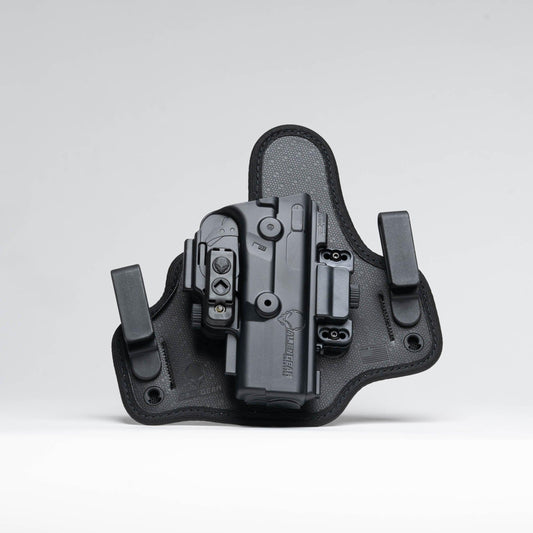
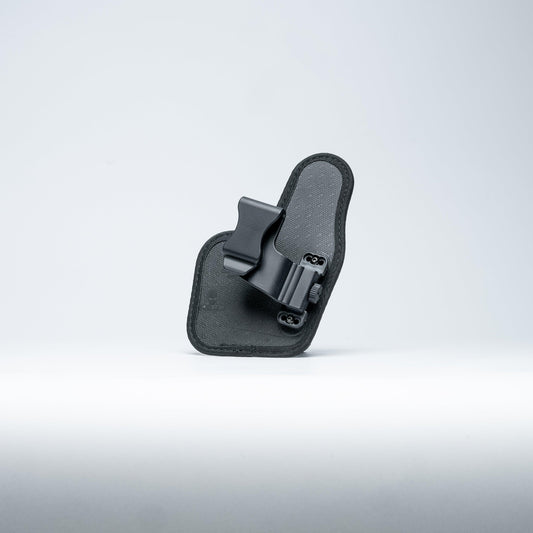
For all-day inside-the-waistband carry, the Cloak Tuck 3.5 backs the holster with a CoolVent neoprene panel across its full width and a spring steel core, with cant and ride height you adjust by hand to tuck the short grip in close.
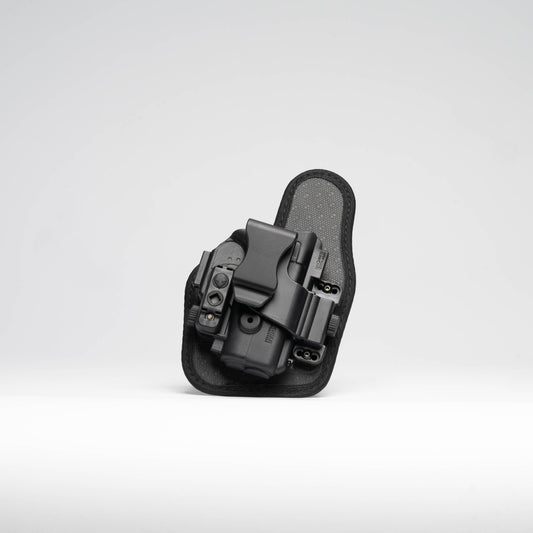
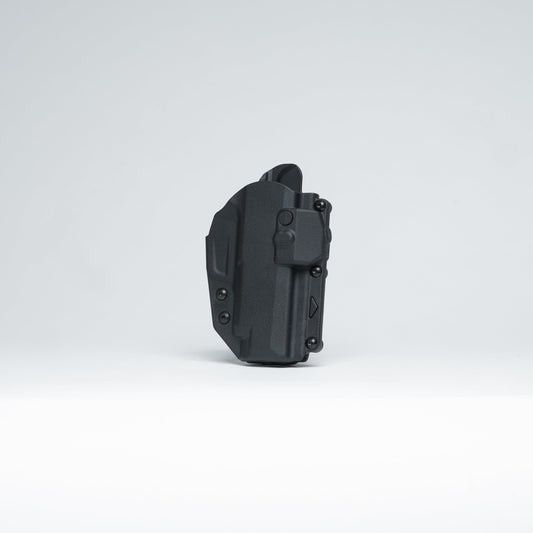
If you would rather have a rigid molded shell with a hard retention click, the ShapeShift 4.0 IWB is the place to start, and it opens the modular system. Appendix is where a subcompact shines, and where grip rotation shows up fastest, so the ShapeShift Appendix Holster uses forward-cant geometry that keeps the butt from rolling out at the 1 o'clock instead of a strong-side shell turned sideways.
OWB, Chest, and Drop-Leg Carry
Concealment is the G26's main job, but it is not the only way to carry one. Pull a jacket or an untucked shirt over the grip and outside-the-waistband carry rides easier through long days and long drives, with the gun on a wider, more stable platform.
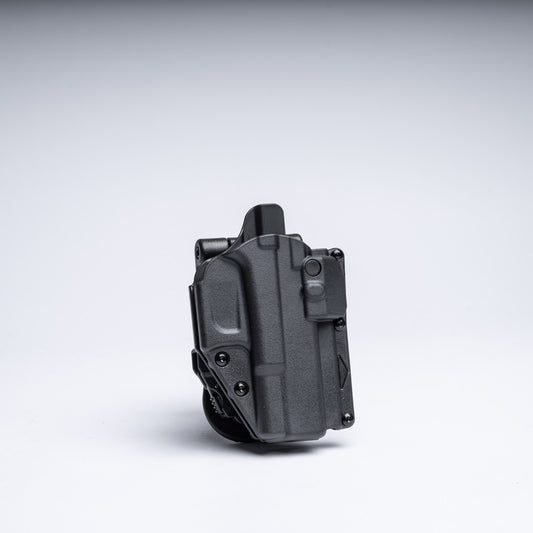
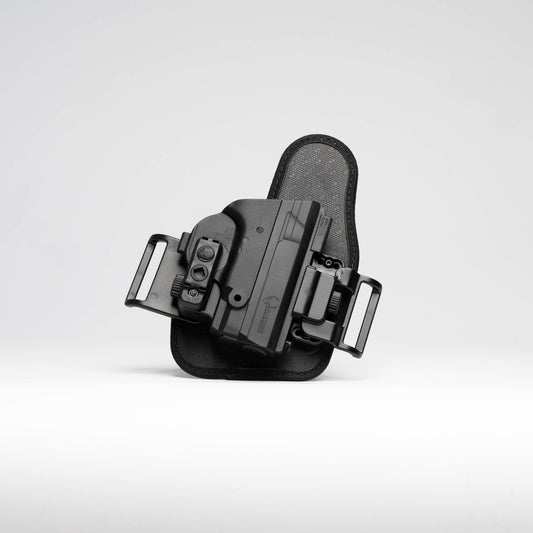
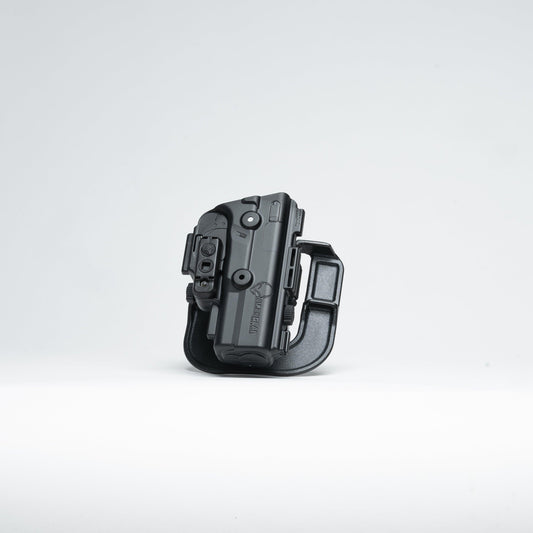
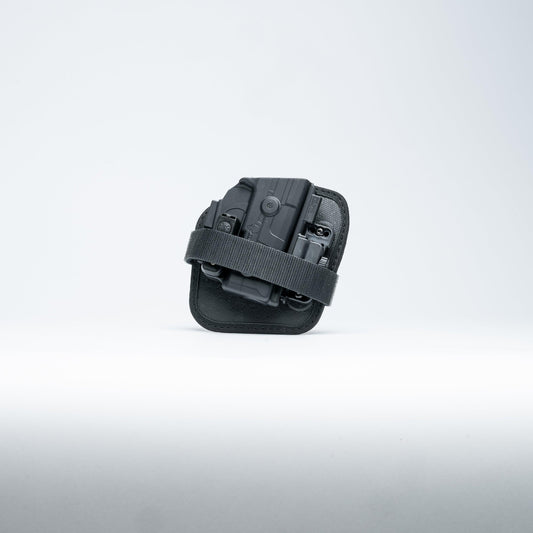
For a fixed belt mount, the Cloak Belt Holster holds its spot without shifting, and for carry that comes on and off between the truck and the range, the Cloak OWB Paddle and the ShapeShift OWB Slide and Paddle pull on and off without threading a belt.
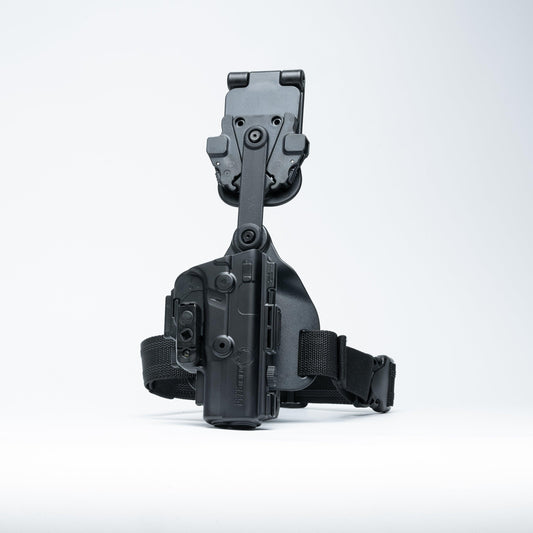
When a belt is not an option at all, because a pack, a harness, or a hunting layer has taken the waist, the Cloak Chest Holster carries the G26 high on a 3-point harness up to a 60-inch chest, and the Cloak Swivel Drop Leg and ShapeShift Swivel Drop Leg bring it to thigh level on a swivel that moves with you.
Lights, Lasers, and Optics Compatible Holsters for Your Glock 26
Here is where the G26 breaks the usual rules, and where a lot of light-bearing holster searches end in frustration.
The Baby Glock has no accessory rail, so a weapon light on a G26 is not a rail-mounted unit but a trigger-guard light or laser like the TLR-6. A holster has to be molded for that exact module to clear it and still cover the trigger, so if you carry one, confirm fit for your specific light or laser at the product page rather than assuming a standard cut will work.
The same goes for a red dot: a G26 MOS with a mounted optic needs optic clearance, which the Cloak Chest Holster supports on confirmed configurations. Matching the holster to the module is what keeps retention solid and the trigger guarded, instead of forcing a unit into a cut that was never made for it.
Active Retention for Backup and Off-Duty
The G26 spends a lot of its life as a backup gun and an off-duty carry, and those roles can come with a retention standard a concealment holster is not built to meet.
Where an assignment or a department calls for active retention, a holster that releases on a straight pull is the wrong tool no matter how well it conceals. The Rapid Force Level II uses a two-stage draw, rotation then lift, so no single tug frees the pistol, in the no-light configuration that suits the rail-less G26.
Worth knowing before you choose: the Cloak and ShapeShift lines are passive retention, right for concealed carry and everyday use, while a Level II requirement points to the Rapid Force holster instead.
The ShapeShift Modular System
You buy a holster for how you carry now, then a season or a wardrobe change sends you looking again.
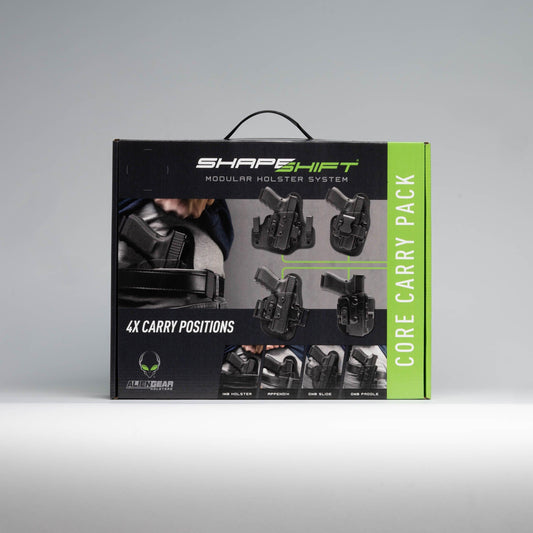
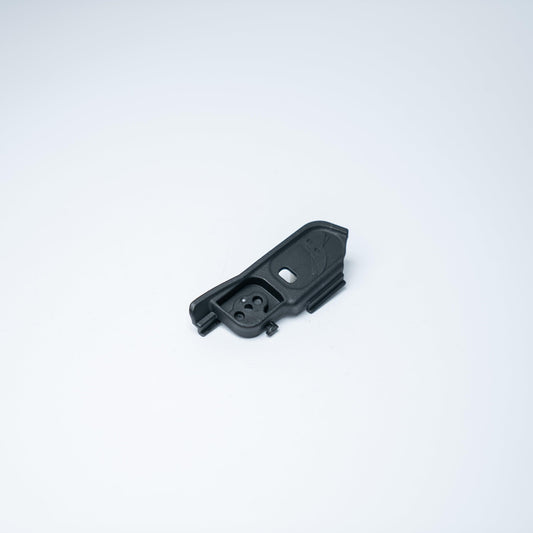
The ShapeShift Core Carry Pack starts you with IWB and OWB Paddle holsters, the shell, and the hardware, and every expansion pack after that adds a carry position on the shell you already own, so a new way to carry the G26 means a new mount, not a whole new holster.
For a subcompact that gets pressed into appendix one week and a belt the next, that flexibility is the point.
Key Decision Factors
- Gen 3, Gen 4, or Gen 5: the G26 keeps the same slide and trigger guard profile across generations, so a holster molded to the G26 fits yours; select your generation at the product page
- Glock 26 MOS or a mounted red dot: confirm optic clearance at the product page; the Cloak Chest Holster supports an optic on confirmed configurations
- Running a TLR-6 or other trigger-guard light or laser: confirm fit for your specific module, since the G26 has no rail and the holster must be molded for that unit
- All-day IWB and deep concealment: the Cloak Tuck 3.5 for weight-spreading comfort under the short grip
- Appendix carry: the ShapeShift Appendix Holster for forward-cant geometry that controls grip rotation
- OWB or off-belt: the Cloak Belt or OWB Paddle for the belt, the Cloak Chest Holster or a Swivel Drop Leg when the waist is taken
- Backup or off-duty active retention: the Rapid Force Level II, no-light configuration
- Left-hand carry: available across every line, selected at the product level during checkout
Common Glock 26 Holster Questions
What is the best Glock 26 holster for concealed carry?
The best Glock 26 holster for concealed carry depends on your carry position. For all-day IWB comfort under the short grip, the Cloak Tuck 3.5 spreads the weight on a CoolVent neoprene backer with tool-free cant and ride height. For a rigid shell with a hard retention click and room to add carry positions, the ShapeShift 4.0 IWB is the move, and the ShapeShift Appendix Holster handles 1 o'clock carry with forward-cant geometry.
Does a Glock 26 Gen 5 use a different holster than a Gen 3 or Gen 4?
A Glock 26 Gen 5 uses the same holster as a Gen 3 or Gen 4, because the G26 keeps the same slide and trigger guard profile across generations and a holster grips those surfaces, not the grip texture or slide stop that changed. Every Cloak and ShapeShift model molded for the G26 fits the Gen 5, selected by generation at the product page.
Will a Gen 3 or Gen 4 holster fit my Glock 26?
A Gen 3 and a Gen 4 Glock 26 take the same holster, since they share the same external slide and trigger guard profile. Every Cloak model fits both, and the ShapeShift shell covers them, with the generation selected at the product page.
Is there a Glock 26 MOS holster, or a holster for a red dot?
A Glock 26 MOS or any G26 wearing a mounted red dot needs a holster with optic clearance, which the Cloak Chest Holster provides on confirmed configurations. For IWB or OWB carry with an optic, confirm clearance for your specific red dot at the product page, since the standard G26 has no factory optic cut.
Is there a Glock 26 holster for a TLR-6 or other light or laser?
A Glock 26 light or laser mounts to the trigger guard rather than a rail, because the G26 has no accessory rail, so a holster for a TLR-6 or similar unit has to be molded for that exact module. If you carry one, confirm fit for your specific light or laser at the product page rather than assuming a standard cut clears it.
What is the best OWB Glock 26 holster?
The best OWB Glock 26 holster depends on whether it stays on the belt or comes on and off. The Cloak Belt Holster holds position on belt loops without shifting, while the Cloak OWB Paddle and the ShapeShift OWB Slide and Paddle attach and detach without threading a belt.
What is the best Glock 26 appendix holster?
The best Glock 26 appendix holster is the ShapeShift Appendix Holster, which uses forward-cant geometry built for the 1 o'clock position to keep the short grip from rolling out and printing. It rides as part of the ShapeShift modular system, so the same shell can move to other carry positions later.
Does Alien Gear make a Level II duty holster for the Glock 26?
A Glock 26 duty or backup holster with active retention is the Rapid Force Level II, in the no-light configuration that suits the rail-less subcompact. It uses a two-stage draw, rotation then lift, so no single pull releases the pistol. The Cloak and ShapeShift lines, by contrast, are passive retention for concealed and everyday carry.
Are left-hand Glock 26 holsters available?
Left-hand Glock 26 holsters are available across every line, selected at the product level during checkout. Whether you carry IWB, OWB, on a chest rig, or on a drop-leg, the same model is offered in a left-hand configuration.