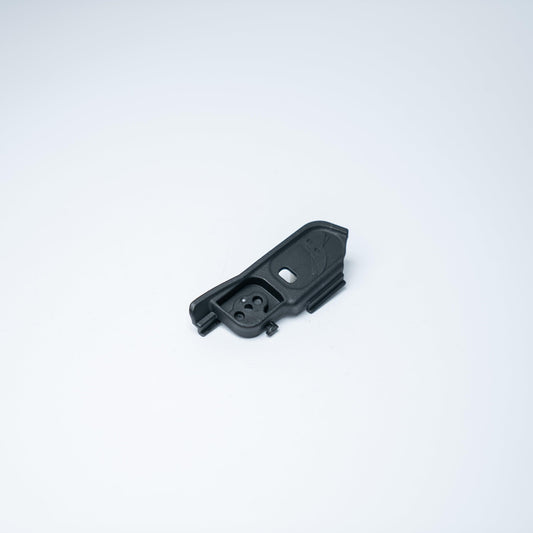
Trigger Guard Holsters: Low-Profile Concealment and Safety
Trigger Guard Holsters secure the pistol by covering the trigger area while maintaining minimal bulk. The holster shell aligns with the slide and trigger guard to prevent lateral movement.
Users gain discreet carry without sacrificing full trigger coverage or reholster confidence.
Trigger Guard Holsters: Material and Fit
Constructed from Boltaron or injection-molded polymer, trigger-guard shells resist heat and maintain precise contours.
Each holster molds to the pistol’s slide radius and trigger-guard geometry. Fit tolerances keep the pistol stable through walking, sitting, and quick movement.
Trigger Guard Holsters: Compatibility with Glock, Sig, Springfield
Trigger Guard Holsters support models with varied slide widths and frame rails. Glock 17/19/19X/26/43X and Glock 45 shells hold the slide line tightly.
Sig P320, P365, and P229R versions account for railed dustcovers and optics-ready variants. Springfield Hellcat and XD families fit slim frames and different barrel lengths. Ruger and H&K fits include micro and full-size contours.
Retention, Safety, and Draw Performance
Holster retention relies on passive geometry rather than friction alone. A precisely molded trigger channel and adjustable tension screw create an audible lock and predictable release. The design preserves a straight draw path along the slide, reducing snag points and maintaining sight presentation for fast, accurate first shots.
Engineering for Micro and Full-Size Pistols
Trigger Guard Holsters adapt to micro pistols like the Glock 42, Ruger LCP, or Sig P365-380 and full-size platforms such as Glock 20/21 and 1911 5-inch. Shell depth and mouth flare change with barrel length and front-sight profile to guide the pistol cleanly out of the holster under stress.
Trigger Guard Holsters: Comfort and Carry Positions
Low-profile shells pair with tuckable belt clips or slim paddles for multiple carry positions. IWB configurations contour to the body for appendix, 3 o’clock, or 4 o’clock carry. OWB paddle and belt options provide fast attachment for range or duty use while keeping the trigger fully protected.
Concealment Considerations Across Models
Slim frames like the Kahr CW9 and Glock 43x print less when matched with a low-volume trigger-guard shell. Compact sets—Glock 19, Sig P320 Compact, Springfield XDs—benefit from reduced cant and shallow ride heights that preserve concealment under light clothing.
Trigger Guard Holsters: Accessory and Optic Notes
Many modern pistols include rails or optic-ready slides. Trigger Guard Holsters for RD or non-MOS variants maintain retention around the slide footprint while offering clearance for small red dots on compatible models (e.g., Glock MOS vs. Non-MOS distinctions). For pistols with Crimson Trace lasers or factory rails, choose a model-specific shell or a holster with a light/laser cutout.
Hardware and Customization
Robust belt clips, corrosion-resistant screws, and reinforced mounting points ensure long-term service. Users adjust cant and retention with simple tools.
Some shells include sweat guards or beavertail coverage to protect the frame finish and reduce hot spots during extended wear.
Trigger Guard Holsters: Durability and Maintenance
Boltaron and molded polymer require minimal upkeep. Wipe shells with a damp cloth and inspect mounting hardware periodically.
Heat exposure won’t significantly warp properly specified materials, and reinforced edges preserve clothing and shell integrity through repeated draws.
Use Cases: Daily Carry, Duty, and Training
Trigger Guard Holsters suit everyday concealed carry, off-duty duty rigs, and range use. They excel when the pistol’s trigger reach and slide geometry demand exacting protection—examples include the crisp double-action systems of Sig P229R and the short, clean trigger breaks of Glock and Springfield models.
Trigger Guard Holsters: Choosing the Right Fit
Match holster model to pistol make and variant (MOS vs. Non-MOS, optic-ready, laser-equipped). Prioritize exact-fit shells for repeatable drawstroke and full trigger coverage. For mixed inventories, consider dedicated holsters per platform to avoid compromise in retention or safety.