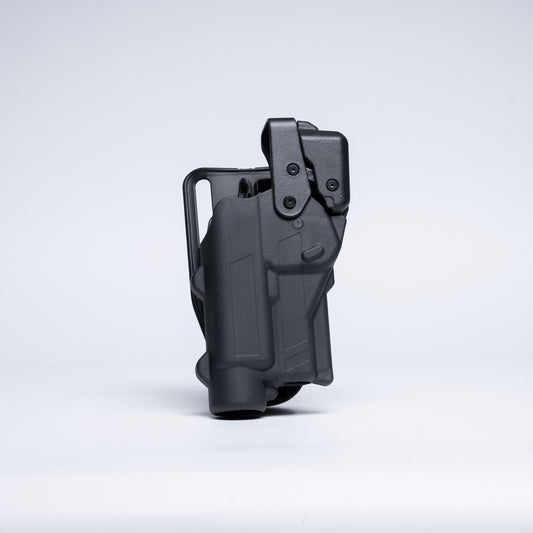
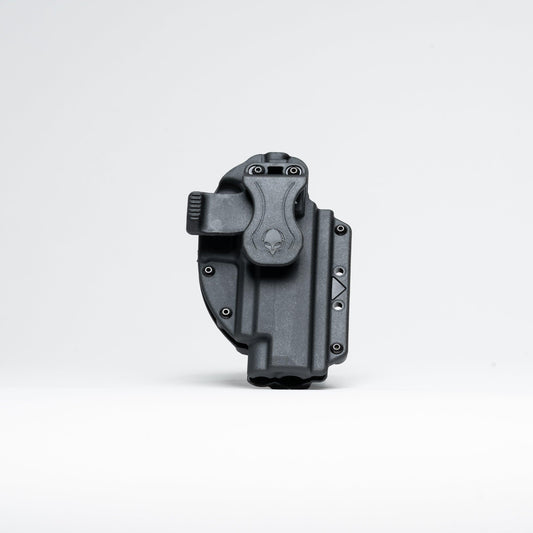
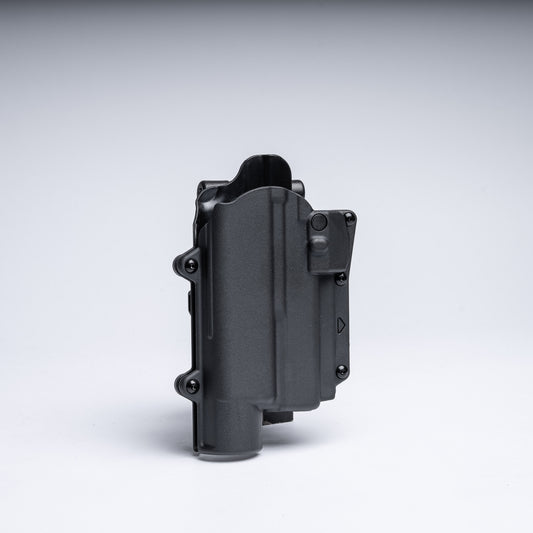
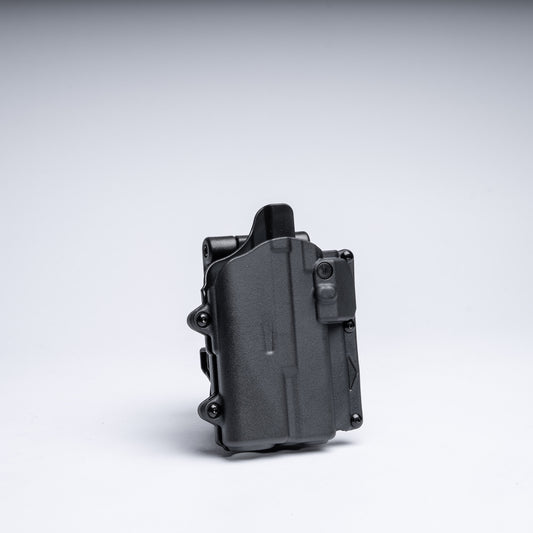
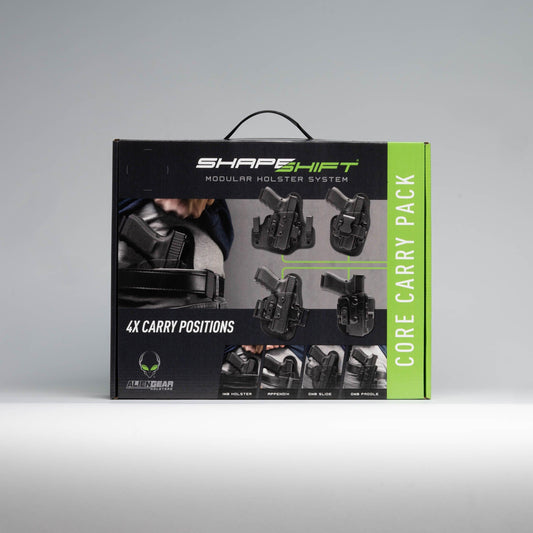
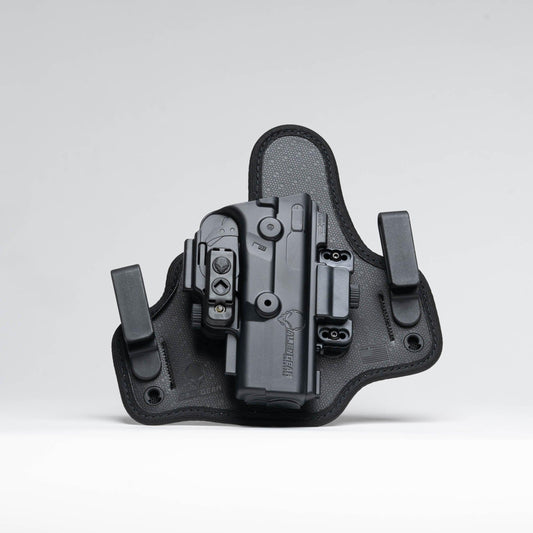
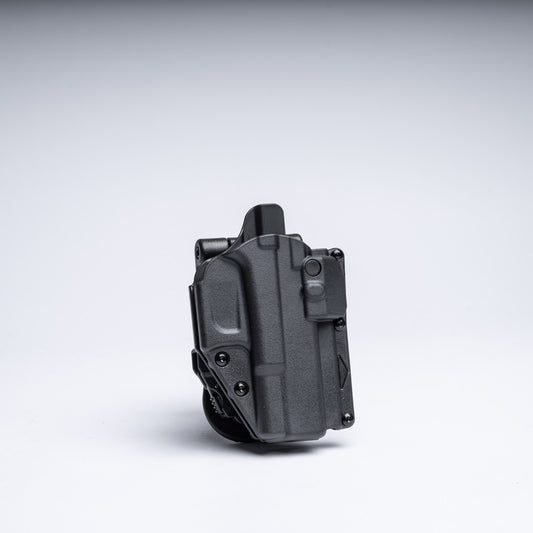
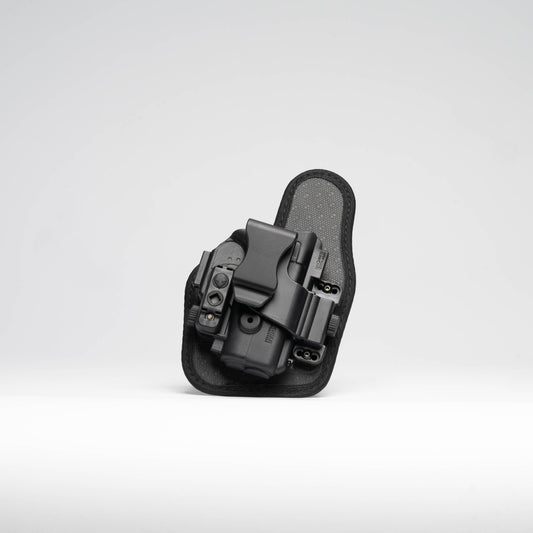
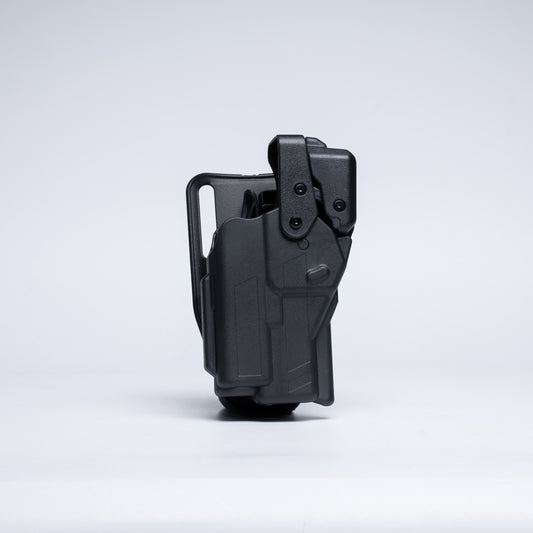
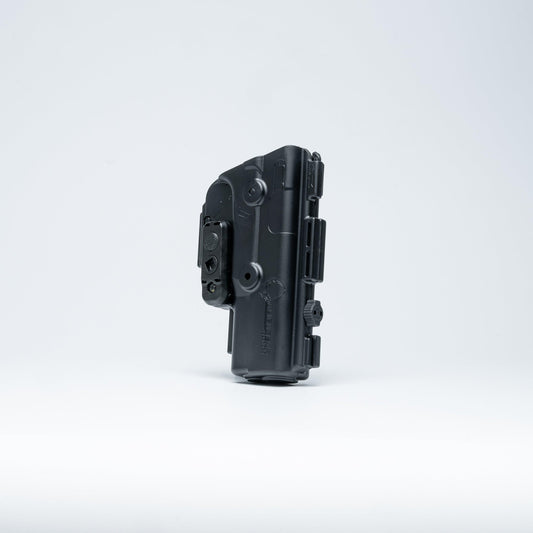
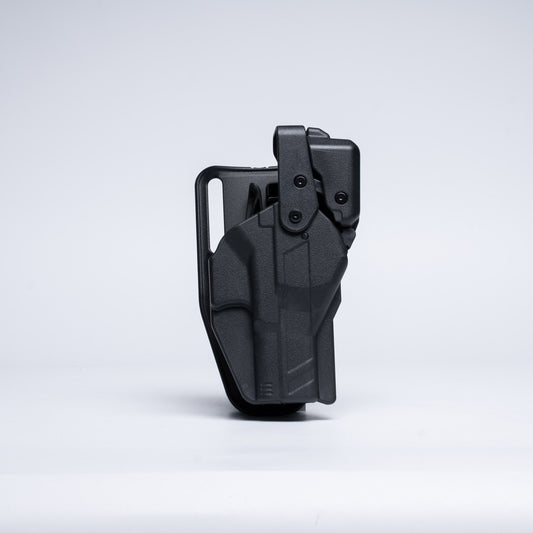
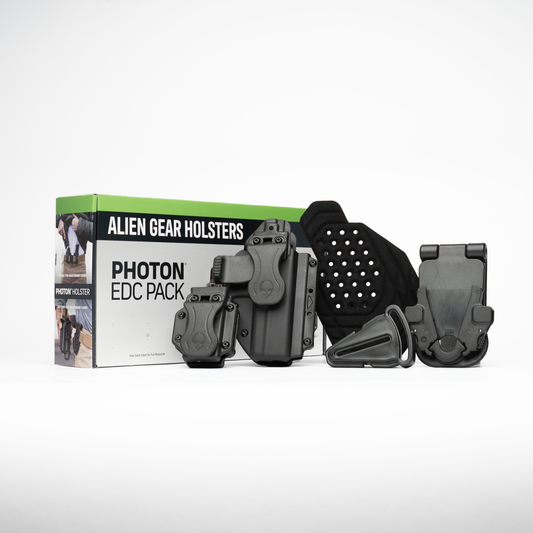
Precision-Molded Glock 23 Holsters: Built for .40 S&W Compact Performance
The Glock 23 is a compact .40 S&W pistol trusted by law enforcement, security professionals, and civilian carriers for its balance of capacity, concealability, and stopping power. Carrying it effectively requires a holster engineered to match its exact slide width, trigger guard profile, and accessory configuration with reliable retention and practical comfort.
Our Glock 23 holsters are molded specifically to the Glock 23 platform, including the Glock 23 MOS and models equipped with popular weapon lights and laser modules. Each holster is designed to provide consistent retention, smooth draw cycles, and full trigger guard coverage.
Whether you carry IWB for concealment, OWB for duty and range work, or in chest or drop leg configurations for tactical applications, these holsters support the Glock 23 without compromise.
Glock 23 Holster Compatibility Overview
The Glock 23 is a compact .40 S&W pistol with a 4.02-inch barrel and an overall length of 7.36 inches. It shares the same frame footprint as other compact Glocks in the 19-size family, but the .40 S&W chambering requires a slightly wider slide to accommodate the larger cartridge.
This dimensional difference is critical for holster fit, particularly with Gen 5 models.
Key specifications:
- Caliber: .40 S&W
- Barrel length: 4.02 inches
- Overall length: 7.36 inches
- Frame size: Compact (similar footprint to Glock 19)
- Slide width: Wider than 9mm compact Glocks
This collection supports the following Glock 23 configurations:
Bare models:
- Glock 23 (all generations)
- Glock 23 MOS
Light-bearing models:
- Glock 23 with Streamlight TLR-1
- Glock 23 with Streamlight TLR-7A
- Glock 23 with Surefire XC1 Light
- Glock 23 with Surefire X300
- Glock 23 with Nightstick TCM-550XL/XLS
- Glock 23 with Nightstick TWM-850XL/XLS
- Glock 23 with Nightstick TWM-30
- Glock 23 with Nightstick TWM-350
Laser-equipped models:
- Glock 23 with Crimson Trace Defender Laser DS-121
- Glock 23 with Crimson Trace Laser LG-436
- Glock 23 with Crimson Trace Rail Master Pro CMR-204/205
- Glock 23 with Viridian Reactor R5 Green/Red Laser ECR
Holsters in this collection are molded to these exact configurations, maintaining proper trigger guard engagement and consistent retention.
Because the Glock 23's .40 S&W slide is wider than 9mm compact slides, holsters marketed only for the Glock 19 may not fit correctly. Gen 5 models in particular require .40-caliber-specific molding to avoid binding or excess retention that can affect draw smoothness.
How to Choose the Right Alien Gear Holster for Your Glock 23
Start with your carry method:
IWB (Inside-the-Waistband) holsters are designed for concealed carry and work best when positioned at strong-side (3–4 o'clock), appendix, or behind-the-hip locations. These holsters prioritize a low-profile silhouette to reduce printing under clothing.
Adjustable ride height and cant allow you to fine-tune comfort and accessibility based on body type and clothing choices. The Glock 23's compact size makes it well-suited for IWB carry when paired with appropriate belt support and holster tuning.
Appendix carry holsters are optimized for forward-of-the-hip placement and typically include features that manage grip rotation, such as concealment claws or wedges. The compact frame of the Glock 23 works well in appendix positions when the holster is properly adjusted to prevent the grip from tipping outward.
OWB (Outside-the-Waistband) holsters are built for open carry, duty use, range training, and professional contexts where concealment is not the priority. OWB paddle holsters attach without a belt and are designed for quick on/off transitions, making them common for range work and training. Belt-mounted OWB holsters offer additional stability and are often preferred for extended wear in duty environments.
Level II and Level III retention holsters incorporate active retention mechanisms and are typically chosen for duty, security, or open carry where additional protection against weapon snatch is required. These holsters maintain secure retention during movement, crowd interaction, or physical engagements while still allowing rapid access under stress.
Chest holsters position the firearm high on the torso and are used when belt-mounted carry interferes with equipment such as backpacks, harnesses, or medical gear.
Drop leg holsters lower the holster on the thigh and are used in tactical applications or when seated for extended periods, though they are less practical for everyday civilian carry.
Hook-and-loop holsters provide flexible attachment options for vehicle mounts, gear panels, or non-permissive carry scenarios.
Match holster to accessories:
If you are carrying a light-bearing or laser-equipped Glock 23, confirm that the holster you select is explicitly molded for your specific attachment. Light and laser modules change the holster's trigger guard clearance and rail geometry requirements.
The configurations listed above represent the exact compatibility available in this collection—other light or laser models are not guaranteed to fit.
Carry Styles Supported by This Collection
This collection includes the following carry configurations:
- IWB: Concealed carry with adjustable cant and ride height for appendix, strong-side, or behind-the-hip placement
- OWB Paddle: Quick on/off attachment without a belt, common for range and training
- Belt-mounted OWB: Stable attachment for duty, open carry, and extended wear
- Appendix: Forward-of-the-hip concealed carry with features to control grip rotation
- Level II retention: Active retention mechanism for duty and professional use
- Level III retention: Enhanced retention with multiple release steps for maximum security
- Chest: High-torso positioning for use with packs or harnesses
- Drop leg: Thigh-mounted positioning for tactical or seated applications
- Hook-and-loop: Flexible mounting for gear panels or vehicle applications
Common Fit or Selection Mistakes to Avoid
Assuming all Glock 19-compatible holsters will fit the Glock 23
While the Glock 23 shares the same frame footprint as the Glock 19, its .40 S&W slide is slightly wider. Holsters molded specifically for 9mm compact Glocks may bind or produce sticky draws when used with the Glock 23, particularly Gen 5 models.
Some holster manufacturers design shells to accommodate the wider .40 slide and market them as fitting both platforms, but this is not universal. If a holster is marketed only for the Glock 19 without explicit .40 compatibility, it should not be assumed to work correctly with the Glock 23.
Forcing incompatible light or laser modules into non-compatible holsters
Each light and laser model has unique dimensional characteristics. Attempting to use a holster not explicitly molded for your specific attachment can result in incomplete trigger coverage, retention failure, or damage to the accessory.
If your light or laser is not listed in the compatibility section above, it is not guaranteed to fit holsters in this collection.
Overlooking the importance of rigid trigger guard coverage
The Glock 23 uses a trigger-safety system without an external manual safety, meaning any contact with the trigger during carry or reholstering can result in an unintended discharge.
Holsters that flex, collapse, or allow debris or fabric to enter the trigger guard area are unsuitable for safe carry. A properly molded holster maintains a rigid shell and fully covers the trigger guard at all times, with an open, non-collapsing mouth for straight-line reholstering.
Blaming the holster for concealment issues without adjusting other variables
Concealment challenges are frequently resolved not by switching holsters, but by adjusting cant, adding a wedge or claw, raising or lowering ride height, or improving belt stiffness.
Glock 23 carriers often purchase multiple holsters while chasing "perfect concealment," later realizing that belt quality, clothing choices, and holster tuning contribute as much as the holster model itself.
Using ultra-cheap or structurally compromised holsters
Holsters with soft hardware, brittle shells, or poor-quality materials can crack, fail, or lose retention without warning.
This creates safety risks including sudden loss of firearm security, hardware failure during draw, or inadequate trigger protection. If a holster clearly does not fit—significant binding, wobble, or inadequate belt attachment—it should not be used.