
Collection: Gun Holsters for Running and Jogging: Belly Band, Chest, and IWB Carry
You carry every day, and then you lace up for a run and realize your regular holster is useless: there is no belt to clip it to, and the moment you pick up the pace it bounces, twists, and works its way out of position. That gap tends to hit right when people feel most exposed, on an early morning route, a quiet trail, or a road with no one else around.
The holsters here, belly bands, chest rigs, and cinch-tight waistband options, hold a handgun still through every stride, without a belt, so running armed feels less like a compromise and more like just another mile.
7 products



Why Your Everyday Holster Quits at a Jog
Stand still and almost any holster works. Start running and the flaws show up inside the first quarter mile.
The gun bounces with every footfall, the clip loses its grip on a waistband with no belt behind it, and the whole rig migrates until it sits somewhere between annoying and unsafe. On a long run, the edge that felt fine at the start rubs a raw spot you will regret in the shower.
And then there is sweat, which soaks into a holster, sits against the pistol, and quietly goes to work on the finish if you never wipe it down. A holster that runs well has to solve a specific list: sit tight to the body so it cannot bounce, carry without a belt, keep a hard edge off your skin over miles, and hold the gun through pounding motion while still letting you reach it fast.
Everything here is chosen against that list, whether you run, jog, or carry through a workout.
Belly Bands: No Belt, Cinched Tight
For most runners, a belly band is the answer, because it fixes the two biggest problems at once: it needs no belt, and it cinches down as tight as you want.
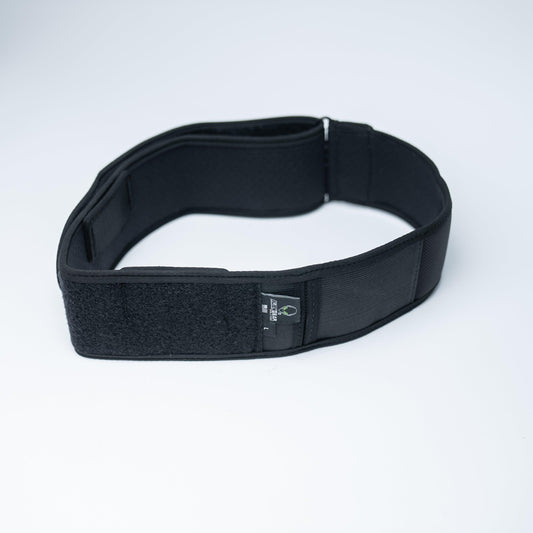
Worn around the waist or just above it, a band wraps the pistol against your body so there is nothing loose to bounce, and you can set it at three or nine o'clock, where a gun tracks with your stride instead of swinging vertically.
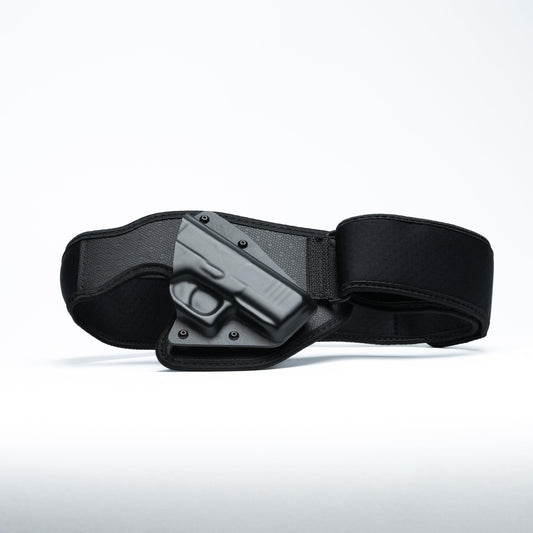
The Sport Tuck Belly Band is built for exactly this, ordered to your specific handgun so it holds a molded, secure fit through a run rather than letting the gun slide around in a loose pocket.
The Low-Pro Belly Band rides thinner and flatter under athletic clothing when you want the least possible bulk beneath a fitted shirt. Both keep the gun fully concealed for runners and joggers alike, carry a spare magazine or a phone alongside it, and rinse clean after a sweaty workout in a way a stiff, absorbent holster never will.
Concealment holds up on the move, too, since a band keeps the pistol flat and centered against you instead of letting a grip poke out the side of a running shirt the way a clipped-on holster can.
Chest Carry for the Trail and the Bigger Gun
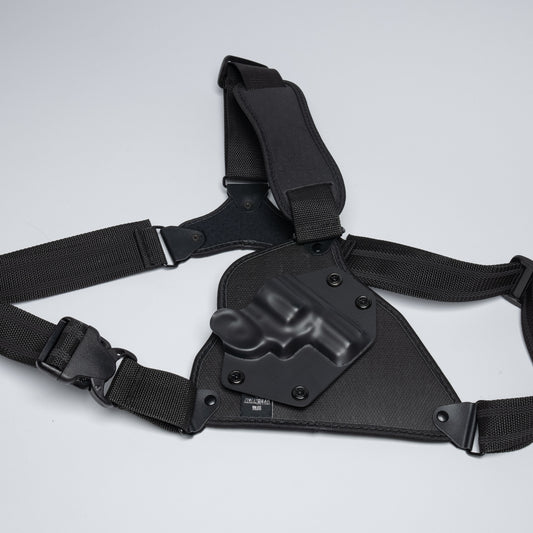
Take the gun off your waist entirely and a whole set of running problems disappears. A chest holster rides high on your torso on a harness that spreads the weight across your shoulders, keeps the pistol from bouncing at the hip, and puts nothing along your beltline to chafe.
That makes it the pick for trail runners, for anyone carrying a full-size gun too heavy for a band, and for runners who already wear a hydration vest the rig can layer with. The Cloak Chest Holster carries an autoloader at a natural draw angle across the chest, and the version built for revolvers does the same for a wheel gun.
Access stays quick and your stride stays free, so miles from the trailhead the gun is exactly where you can reach it, not buried under a waistband and a base layer. Under a loose shirt it hides well, and in cooler weather it disappears entirely beneath a running jacket.
Waistband Carry That Holds on a Run
Some runners still want the gun at the waistband, close to where they carry it every other day, and that can work if the holster locks in instead of dangling from a single clip.
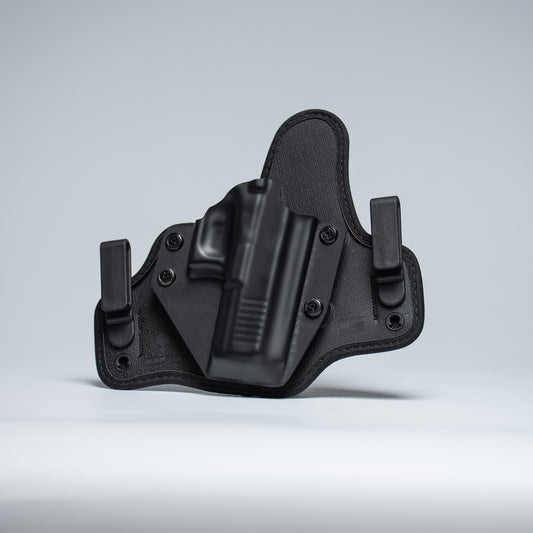
The Cloak Tuck 3.5 pulls tight against the body with adjustable retention and ride height, so you can cinch it firm, drop it low, and set it at three or nine o'clock where it moves the least. Snug it under the waistband of your running shorts or tights, keep the pistol light and flat, and it rides far better than most people expect.
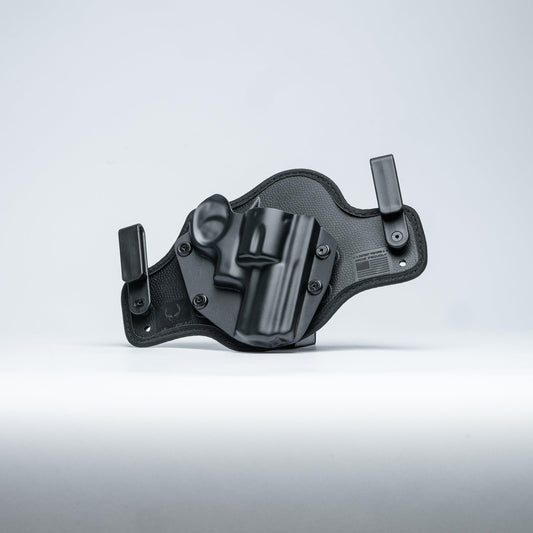
Revolver carriers get the same in the Cloak Tuck 3.0, shaped for a J-frame or similar small wheel gun. The honest caveat: the heavier the gun, the more it fights you at speed, so waistband carry rewards keeping it small and cinching it down hard.
Dialing Out the Bounce
Whatever you carry it in, a few adjustments separate a setup you forget about from one you fight the whole run. Keep the gun at three or nine o'clock, in line with your direction of travel, where it moves least with each step; pushed toward the front or the small of your back, it gets more room to swing.
Cinch everything tighter than feels necessary standing still, because a band or harness that seems snug at rest will loosen the second you are moving.
And test it before you trust it: run a short loop close to home, at real pace, and confirm the gun stays put and stays reachable before you head out on a route where it actually matters. Small tuning, big difference over the first mile and the tenth.
The Gun You Run With, and Keeping It Working
The holster is half the setup; the gun is the other half.
Weight is what bounces, so the pistols that run best are the light ones, a slim single-stack, a micro-compact, or a small-frame revolver that carries almost like nothing over a few miles of running or a longer jog.
A heavy full-size gun can be carried, but it takes a chest rig and a lot of cinching to tame. Then there is the part almost no one mentions until a slide starts to rust: sweat is salty and corrosive, and a pistol pressed against your body for a sweaty hour pays for it.
Wipe the gun down after a run, let it dry instead of sealing it away damp, and function-check it regularly, especially the carry gun you take out for exercise day after day. Carry light, keep it dry, and the same setup will still run months from now.
Running Holster Questions
What is the best holster for running with a gun?
The best holster for running keeps the gun tight to the body, needs no belt, and holds through a full stride. For most runners that means a belly band like the Sport Tuck or Low-Pro, which cinches the pistol against the torso, or a chest holster that moves the weight off the waist entirely. A cinch-tight waistband holster also works for a light, flat gun carried at three or nine o'clock.
How do you keep a gun from bouncing while running?
Keeping a gun from bouncing while running comes down to three things: carry it tight, carry it light, and carry it at three or nine o'clock in line with your stride. A belly band or chest harness cinched firmly to the body removes the slack that causes bounce, and a lighter pistol has less mass to swing. Position matters most, since a gun at the front or small of the back travels far more than one at the hip.
What is the best gun to carry while running?
The best gun to carry while running is a light one, because weight is what bounces over miles. Slim single-stacks, micro-compacts, and small-frame revolvers carry best and stay controllable in a belly band or waistband holster. A full-size pistol can be carried on a chest rig, but most runners are happier with something small and light they barely notice at pace.
How do you carry a gun running without a belt?
Carrying a gun while running without a belt is exactly what belly bands and chest holsters are made for. A belly band wraps the waist or midsection and holds the pistol with no belt at all, while a chest holster rides on a shoulder harness. Both let you carry in running shorts, tights, or athletic wear that has nowhere to clip a standard holster.
Is a belly band or a chest holster better for running?
A belly band suits most road runners who want the gun close to the waist and fully concealed under a shirt, while a chest holster suits trail runners, larger guns, and anyone who dislikes weight on the waist. Chest carry minimizes bounce and chafing and layers with a hydration vest, and a belly band conceals flatter under fitted athletic clothing. The right pick depends on your gun's size and where you run.
Does sweat damage a gun when you run with it?
Sweat can damage a gun carried while running, because perspiration is salty and corrosive and sits against the pistol during a workout. To prevent rust, wipe the gun down after each run, let it dry rather than storing it damp, and function-check it regularly. Many runners choose a stainless or coated pistol specifically because it resists the moisture that comes with exercise.
Can you carry a revolver while running?
A revolver is a popular running choice, because small-frame models are light, simple, and carry with almost no bounce. The Cloak Tuck 3.0 holsters a J-frame or similar wheel gun at the waistband, and the revolver version of the Cloak Chest Holster carries one across the chest for trail running. A light revolver pairs especially well with a cinched belly band.
What is the best concealed carry holster for jogging?
The best concealed carry holster for jogging keeps a light pistol tight and hidden without a belt. A belly band worn under a moisture-wicking shirt conceals well and cinches out the bounce, while a low-profile band rides flat under fitted clothing. For joggers carrying a larger gun, a chest holster under a loose shirt or vest conceals it and carries the weight comfortably.
What holster works for carrying during a workout or the gym?
For a workout or a gym session, the same beltless carry that works for running applies: a belly band holds a pistol tight to the body through lifting, bending, and movement, with no belt required. A low-profile band conceals under athletic clothing, and removing the gun to wipe it down afterward keeps sweat from corroding it over time.