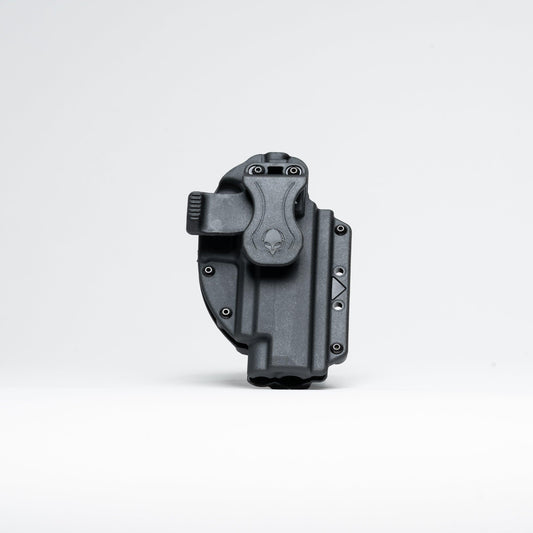
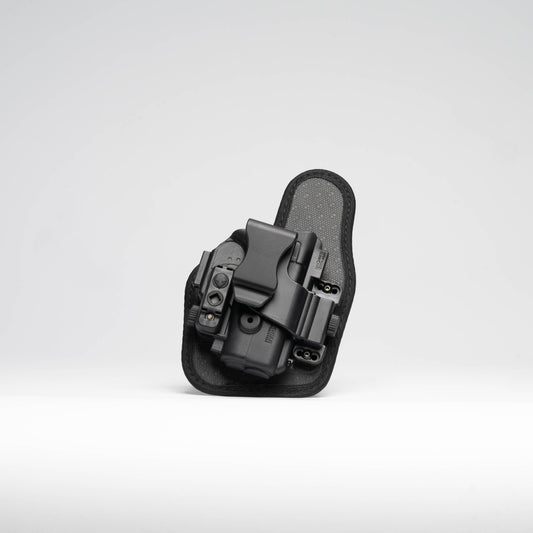
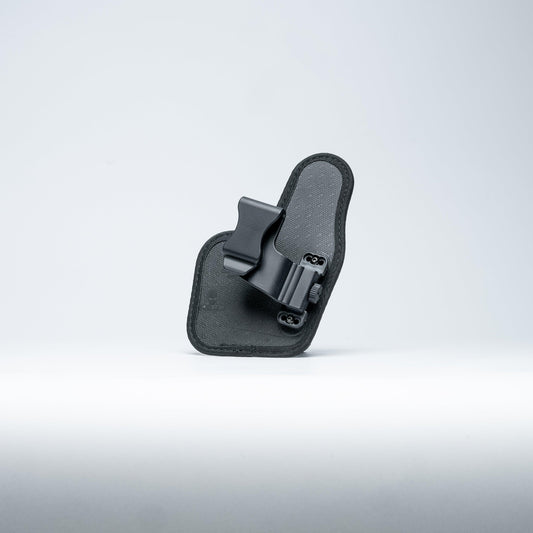
What Is Appendix Carry (AIWB)?
Appendix carry, or AIWB, is short for Appendix Inside the Waistband. It places the firearm at the front of the body, inside the pants, in the space between the navel and the hip bone.
For a right-handed shooter that usually falls around the 12 to 2 o'clock position, and around the 10 to 12 o'clock position for a left-handed shooter.
The position is popular for good reason. The gun sits near the centerline of the body, so the draw is short, fast, and natural, almost like reaching for your belt buckle. It also conceals well, since the holster does not bulge when you bend the way a hip holster can.
With the right appendix holster, a full-size pistol can disappear under a simple t-shirt.
Why Carry in the Appendix Position?
Appendix carry holsters, also called AIWB holsters, deliver three things concealed carriers care about most in a single setup: speed, concealment, and control.
The forward position gives you faster draw times along a straight line to the target. It keeps the firearm in front of you where it is easier to protect and harder for someone to grab in a close-contact struggle. And it conceals cleanly under a wide range of clothing, from fitted shirts to business-casual layers.
The same forward placement also keeps the gun accessible while seated or driving, when a seatbelt would block a hip holster.
What Makes a Good Appendix Carry Holster?
Carrying at the appendix position puts the holster against soft, sensitive parts of the body, so the design has to balance comfort with readiness.
The features that matter most:
- Adjustable ride height and cant let you fine-tune how high the gun sits and the angle of the grip, which is the key to both concealment and comfort.
- A concealment claw presses against the belt to rotate the grip inward, tucking the butt of the gun against your body so it does not print.
- A wedge or muzzle pad tilts the holster and fills the gap below the gun, pushing the grip in and taking pressure off your abdomen when you sit or bend.
- A rigid, non-collapsing shell keeps the holster mouth open so you can reholster safely without the material folding into the trigger guard.
- A fully covered, molded trigger guard locks the gun in place and blocks anything from reaching the trigger while holstered.
- A padded, body-facing backer and rounded edges cut down on hot spots during long wear.
These are the details that separate a purpose-built appendix holster from a basic inside-the-waistband holster worn out front.
Is Appendix Carry Safe?
This is the most common question about AIWB carry, and it deserves a straight answer. Carried correctly, appendix carry is as safe as any other position.
The concern is real but manageable: in the appendix position the muzzle points down toward the lower body, so the equipment and the technique have to be right.
Three things make appendix carry safe.
First, a dedicated AIWB holster with a rigid shell and full trigger guard coverage, so nothing can touch the trigger and the holster cannot collapse.
Second, slow, deliberate reholstering, looking the gun back into the holster rather than rushing it, since reholstering is the moment when accidents happen.
Third, consistent training and clean garment management so clothing never enters the holster with the gun.
Use a quality gun belt, keep your finger off the trigger, and reholster with care, and the appendix position is a safe, proven way to carry. Skipping the right holster or rushing the reholster is where the risk comes from, not the position itself.
Appendix Carry for Every Body Type
Appendix carry is not just for slim, athletic builds. The position works across a wide range of body types when the holster is set up correctly.
Larger carriers often do best with a holster that places the clips or loops higher on the body, paired with a strong claw and a wedge to tilt the grip inward.
Wearing the belt slightly higher on the abdomen can open up room for the rig and make reholstering easier and safer.
Smaller-framed carriers and many women benefit from a slim shell, a shorter barrel, and careful ride-height tuning so the grip does not push up into the ribs.
The takeaway is simple. If appendix carry felt uncomfortable in the past, the holster setup was probably the problem, not your build. Ride height, cant, wedge thickness, and claw tension are all adjustable, and dialing them in is what makes AIWB comfortable for the long haul.
Do You Need a Dedicated AIWB Holster?
Yes. A standard inside-the-waistband holster worn at the front is not the same as a true appendix carry holster. AIWB holsters are designed with a neutral cant, claw and wedge compatibility, rounded muzzle ends, and a shell shaped for the forward position.
Repurposing a basic IWB holster usually means more printing, more discomfort, and a less safe reholster. For appendix carry done right, start with a holster built for it.
Precision Fits for Popular Handguns
Every appendix holster in this collection is molded to exact firearm dimensions for a positive lock-up and a fully covered trigger guard. The lineup covers everything from full-size duty pistols to deep-concealment subcompacts, including:
- Glock: 17, 19, 19X, 26, 43, 43X, 45, 48, and more
- Sig Sauer: P365, P365XL, P320 Compact, P320 Full Size, M17, M18
- Springfield Armory: Hellcat, Hellcat OSP, XD Mod.2 Subcompact, XD-M 3.8, XD-S Mod.2
- Smith & Wesson: M&P Shield, Shield Plus, M&P9 M2.0, M&P40 M2.0
- Other leading brands: H&K VP9, Walther PPQ, Ruger LCP II, Kimber 1911, CZ P-10 C, Taurus G2C
If you carry a compact or subcompact 9mm, you are squarely in the sweet spot for appendix carry.
Lights, Lasers, and Optics
Modern carry setups often run a weapon light or a red dot, and this collection includes appendix holsters built to fit them.
Light-bearing options accommodate popular models like the Streamlight TLR-7A, SureFire X300, and Nightstick TCM series, while optic-ready cuts clear red dot sights without sacrificing retention or trigger guard coverage.
Sidecar and Modular Options
For carriers who keep a spare magazine up front, an appendix sidecar holster pairs the pistol with an attached mag carrier for a balanced, streamlined loadout.
Modular designs let you add, remove, or reposition the mag carrier so one holster adapts to how you carry on any given day.
Appendix Carry vs. Other Positions
Compared to behind-the-hip IWB carry at the 3 to 5 o'clock position, appendix carry generally offers a faster draw and better concealment when bending, since the holster sits on the flatter front of the body.
Behind-the-hip carry can feel more comfortable for some people during long periods of sitting and hides a larger gun more easily on certain builds. Compared to OWB carry, appendix carry conceals far better at the cost of a little capacity for a full belt rig.
Many experienced carriers own more than one holster and switch based on clothing and activity.
FAQ
What does AIWB stand for?
AIWB stands for Appendix Inside the Waistband. It refers to carrying a firearm inside the pants at the front of the body, near the appendix area.
What is appendix carry?
Appendix carry is a concealed carry method where the holster sits at the front of the waistband between the navel and hip bone, usually around the 1 o'clock position for right-handed shooters. It is valued for a fast draw and strong concealment.
Is appendix carry safe?
Yes, when done correctly. Use a dedicated AIWB holster with a rigid shell and full trigger guard coverage, keep your finger off the trigger, and reholster slowly and deliberately. The reholstering step is the key safety moment, so never rush it.
Is appendix carry comfortable?
It can be very comfortable once the holster is tuned. Adjusting ride height, cant, and wedge placement relieves pressure when sitting or bending. New AIWB carriers often feel pressure points at first that go away after dialing in the setup.
Can I use a regular IWB holster for appendix carry?
It is not recommended. Appendix carry works best with a holster designed for the position, with a neutral cant, claw and wedge compatibility, and rounded edges. A standard IWB holster usually prints more and is less comfortable up front.
Can bigger guys carry appendix?
Yes. Larger carriers should look for a holster with higher clip or loop placement, a strong concealment claw, and a wedge to tilt the grip inward. Wearing the belt a little higher on the abdomen also helps with comfort and safe reholstering.
What is the best gun for appendix carry?
Compact and subcompact pistols carry best in the appendix position. Popular choices include the Glock 19, Glock 43X, and Glock 48, the Sig Sauer P365 and P365XL, the Smith & Wesson Shield Plus, and the Springfield Hellcat.
Can I run a weapon light or red dot with an appendix holster?
Yes. This collection includes light-bearing appendix holsters for lights like the Streamlight TLR-7A and SureFire X300, plus optics-ready cuts that clear most red dot sights.
What o'clock position is appendix carry?
Around 12 to 2 o'clock for right-handed shooters, and around 10 to 12 o'clock for left-handed shooters.